Language in Our World

As the years go by, a new generation of kids and teenagers create new words of slang to communicate with others. Depending on who you’re talking to or what you’re talking about, most slang can be understood and acceptable.

In school settings, text messaging, or on social media you will find all different types of slang being used. A younger audience is known to use slang to make communicating fun, fresh, and sometimes even humorous. It creates a bond between younger groups to be able to socialize freely without being serious all the time.

A majority of young audiences are known to comment a lot of slang under the comments of posts on social media. If their friend just posted a really cute picture, they would comment “Thicc”, “Bomb”, and even just fire emojis. Now you’re probably wondering what these words even mean if you’re not familiar with much slang.
“Thicc” is known for someone who is more big, curvy, or sexy. That term is usually posted under someone who posted a full body picture and is looking exactly as the word is defined. “Bomb” and the Fire emojis are pretty similar and can be known as beautiful and just overall that the person is looking pretty attractive.

Although a younger audience takes up a majority of the population on social media platforms, Older adults are right behind them scrolling as well. We all can be familiar with a family member that tries to fit into the younger crowd.

Often when you see your parent or any older family member trying to do something that the younger kids would normally be doing, most kids will be embarrassed and tell them to never do that again out of humiliation. It’s questionable on why adults can’t have fun with the younger crowds, but it’s usually unacceptable depending on how much the individual cares about their reputation.

Adults are seen to only do boring and mature activities. When they’re doing an activity that their kids would usually do, they’re seen as immature or even crazy. This excludes them from the younger crowd, even through social media. It is usually something no one is interested in. Although I personally love seeing anyone being able to have fun no matter the age.

This doesn’t stop older adults from trying to find out the meanings of what the kids are talking about these days. You usually get a confused expression in return followed by a question on if what they even said was English.

If I’m talking to my Grandma that is not familiar with much slang or young culture, she’s not going to understand when I call her “Bae” out of love. It originated back in 2011 when famous rap songs started to use the term, making it go viral.

Instead of saying babe or baby, you would call them BAE. It can also be used for anyone that you see as someone you’re going to show much love to before anyone else. Well it is mainly known for the sweet and loving terms in today’s age, but not many know that it is known as poop in the Danish language. Pretty funny, right?

https://www.lifewire.com/what-does-bae-mean-3485960

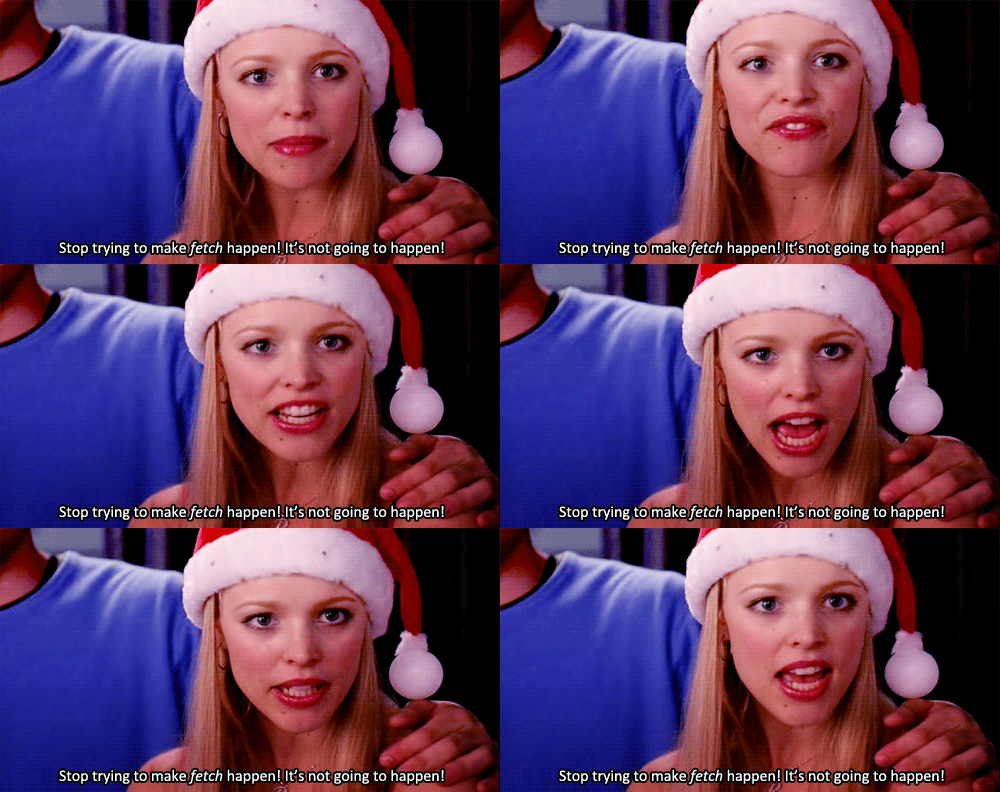
Around the World, you can hear and learn different languages besides just the younger cultures slang. If you’re heading off to a certain city or state, you will quickly learn that those who grew up there have their own set of language as well.

In Hawaii, you’ll often hear new terms that you’ve never heard before if it’s your first time visiting, but those who have been living there know just exactly what they’re talking about. Depending on what city or state you’re in, most people are usually welcoming and all about you learning.

Although the city or states that aren’t very welcoming might result in some mean facial expressions or a tap on the shoulder to learn your place. This usually happens because those who originate from their home town, doesn’t want just anyone throwing around their terms like an everyday language. Due to the fact that they’ve earned their right to be able to speak that language.

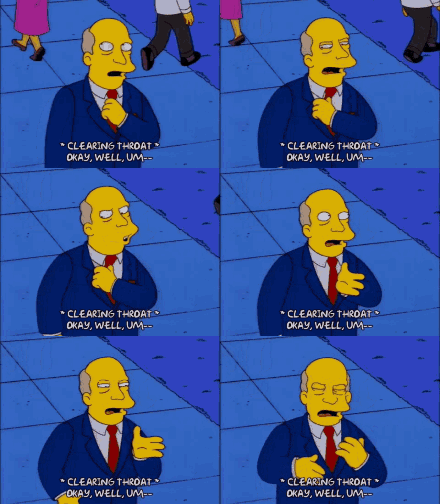
Excuse the language but I felt this was a funny and perfect example on someone learning a different language that they’re not familiar with to fit into the crowd.

It can also depend on what you look like. If you don’t look like the type of person that they would want in on their language, you would usually be told when it is or not allowed.

Language can take time to create or to learn and can be created from young to old. At the end of the day, we’re all just trying to communicate with one another no matter what the language!
The Role of Perception in Mass Media

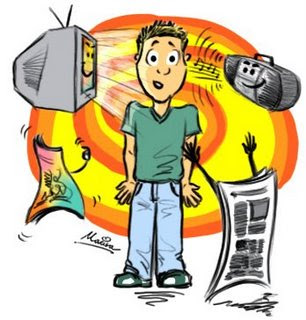
If you own any type of social media, you can often come across a picture that can make you doubt your own image but as well as doubt the world around you. When you begin to think about the social schema in the modern age, you can think about how a majority of people change their self image over the years with how much we are being shown on how to look.

What do we often see on our social media page being shown off? I for one usually come across an Instagram model showing off a body picture with limited clothes on and living a lavish life. Eventually, a majority of fans that look up to or is inspired by that model, begins to develop a social schema where they feel as if they need to fit in with the society changing around them.

Why do we feel the need to change for society? Is it the attention that we seek? Are we having pictures of perfection thrown into our face that makes us feel pressured to change? With mass media being just at the touch of our fingers, we are usually seeing whatever is on the front page, explore page, or post for quite awhile until the popularity goes down.

Mass media can be viewed differently from everyone. It can be both a negative and positive thing. We can get breaking news within the same hour that the event happened. Generations before our time, it would take days or weeks until an audience was informed.

As most of us view any type of mass media, we might notice seminal perception. If we view content that is being shown to us often or repeatedly, it can be often viewed as subliminal perception. Subliminal advertising is made out to NOT be so obvious when manipulating you into doing or buying something.

A lot of celebrities will continue to advertise their products and post only positive reviews to show their viewers to get their hands on the “amazing” product before they’re all sold out. Until the buyer actually tries the product for themselves, they won’t know if the product actually lives up to all the positive feedback.

Not only do we only see the positive reviews, but often we usually only see a certain perception in pictures or videos that we see on mass media. We either see only the negative side or the positive side of a source, hardly ever do we see both sides. The perception we have on photos can very much differ based off of the limited information we have on the post.

In the text of “Perception in Mass Media”, they show examples of how some volunteers would perceive a picture depending on the mood they were in. This experiment I found myself being able to relate to.

When I come across a picture of a happy person having fun and i’m in a good mood, I begin to feel happy for them. Otherwise, if I find myself in a bad mood and browsing through Mass Media, I begin to feel annoyed at their happiness.

Everyone has their own perception on everything. When you have the mass media showing you the statistics of topics, it can be hard to turn away from the high percentages you see on a data chart. If we see a poll of how many people are getting sick or dying by vaping/smoking, sooner or later a majority of those who do smoke or vape will try to quit the habit.

With Mass Media having so many pro’s and con’s, it is all about someone’s perception on how they view topics throughout time. The background information they find on the platforms that we have access too, can very well even change their perception on how they view anything in our world even if it is good or bad.

Personal Writing History

Before I was able to get into English Honor classes, I used to struggle with my writing a majority of my school career.

The main thing that was complicated for me was comprehending what I was reading. I was a fast reader luckily, but if you asked me what I just read, I would look at you with a blank face and answer with uncertainty.

Not being able to fully comprehend a reading you’re supposed to be writing about was complicated and frustrating. Moving from school to school didn’t help me much either. When I would finally get comfortable enough to ask my teachers for help, I would be moving off to a new state.

When I finally moved out to Nevada, I would feel left out during discussions in class and found myself being shy and quiet. I began to start reading at the library and seeking out opportunity to talk with teachers to help me with my reading comprehension as well as my writing skills.

It wasn’t long before I was being noticed for my improvement. The study groups and one on one teachings really began to finally click something in my brain. I began to feel more confident and as if I had a voice that I was proud of in my writing!

Staying in a school district for more than a year made me more comfortable with asking questions and overall learning how to actually socialize. I began to write in my HSM diary at home that contained my day to day life. I not only started to fall in love with being to say whatever I wanted, but also being able to say things I could have never said aloud.

I began to start writing whenever I could. Often if one of my family members were sick, I used to make fake forms to fill out as if I was the doctor just so I can write and make a “diagnosis”. I would even practice writing my name in cursive just in case if I became famous one day!

My imagination of course didn’t stay young forever and eventually I went off to High School. Not to sound depressing, but high school was probably one of the worst times for me! The English honor classes drained me, my social life was chaotic and full of drama and school began to feel like such a chore.

This is when I began to lose my touch with writing. I stopped writing in my diary and holding in my feelings daily. The lessons in English class were boring and long and no light bulb was turning on in my head. My senior year was a year of wanting to just pass my classes and get it over with.

During class time, it was difficult for me to be told to write about such an uninteresting book that I could barley wrap my head around. I understand that we have to read books that we’re not fans of, but I believed that being able to write about a story that you personally found interesting would result in a better grade.

After taking two years off after I graduated, i finally started college! I’m slowly remembering how much I missed learning from teachers who actually like to teach. Especially teachers that make sure you have the tools and help that you need to succeed. It’s only my third week and I think I’ve written more than any other English class but I don’t mind at all!

One of the most literate people that I know is my boyfriend, Andrew. I’ve never met someone that can read as much as he does. Everyday he’s reading a new topic and genuinely enjoys doing so. It inspires me to take more time of my day to read about things that actually matter instead of scrolling through social media every other hour.

When Andrew texts or calls me to just chat, we often discuss what he read about that day. He not only makes the topics more interesting but shows me that I also have the power to make my listeners/readers hear my voice when I write or talk.

I want to be able to have my readers be interested in my writing or to read something they’ve never read before. I’m all about having the patience and an open mind to grow with my writing. I just need to not compare myself to the other amazing writers out there.

As I get older, I usually spend my free time trying to catch up on sleep, homework, or family time because I work so much. On the other hand, I would like to start writing more as a hobby to not only improve my writing skills but to also make that little light bulb go off in this head of mine.

Blog Post 1: Media Campaigns and Perceptions of Reality

A majority of us have heard of the phrase “Jump on the bandwagon”. From Politics, Social Media posts, and overall any debatable topic brings an audience of different opinions.

To not feel left out or be viewed as unintelligent, readers will agree with a popular opinion that they have no background information on, other than the comments of others or the popularity of the subject.

Pluralistic Ignorance is a more in depth way of explaining when a group of people follow others norm. For example, in the picture I posted above, the elephant is joining a political side that he has no interest in but would rather join a certain crowd to not be out of the picture.

The day of the Super Bowl, you often find people going for the winning team just so they’re able to celebrate. Months before they have no intention of going for this team until they see that it’s the most believed team to win the game. This is a perfect example of what jumping onto the bandwagon would be.

While people begin to follow whatever is on the front page of twitter or any other social platform, it can sometimes be false information. Being told false news can spread fast and dangerously if heard by the wrong person. It is important to know the background story before believing, sharing, or joining any discussion.

Currently we heard that a famous comedian was injured in a car accident but we also heard rumors that he was left paralyzed from the accident. The paralyzed rumor was false but it was what followers were sharing because it was being posted everywhere.

Not only is there stories all over the internet that we come across daily, but we have our own expectation on what we share or post. What is funny enough to get likes? What picture is better to post? These are just few of the questions that we can find ourselves thinking about before posting into our platforms.

We begin to create a false reality when we try to post as much perfection as we can onto our social media. The false consensus effect is what we can use to describe the way others portray their fake reality and bring others along.

I personally see all different kinds of social media posts online that portray a false reality and where people are jumping onto the bandwagon. If you tend to read through the comments of posts, you can see when people have no idea what they’re talking about but need to make sure they comment to get likes.

Bringing us back to the likes, in the picture above you can see how some of us will take time out of our day to create a false reality and making sure we get those likes to fulfill our ego or to even fit in with society.

Daily we meet or already know someone who tries a bit too hard to fit in and jumps onto that bandwagon. It is more important in life to live in the reality you have than creating or joining a false one.

Instead of wanting to please others and fulfilling their needs, we need to ask ourselves why do we care. We shouldn’t care, because at the end of the day we live in our reality, not them. So post that unfiltered photo, do your research and join the side you agree on, and enjoy the reality you actually live in.

They Say, I Say: Part 1

Chapter 1

Most writers often believe that they can do no wrong when summarizing a text for their readers. Regardless, we all make mistakes that we can learn from. Graff and Birkenstein showed us that anyone can make a mistake with their writing and that it is, of course, inevitable and understandable.

Throughout this chapter, they showed us examples of speakers and writers that we can learn from. The templates they provided us gave us insights of how to improve our writing. With how to start off our writing, how to keep our readers interested during the text, and how to make them want to come back for more.

What I Learned: In this part of the reading, Graff and Birkenstein show us templates. Each Template demonstrated how we can better improve our writing that I will now use in my everyday projects. After finishing each chapter of “They Say, I Say”, I hope to be able to learn how to add each technique that Graff and Birkenstein express to us in my writing from this day forward.

Chapter 2

During this chapter, we’re taught that although you may not agree with a writer or speaker’s words, it is important to understand their point of view while summarizing. As Graff and Birkenstein’s point is, “To write a really good summary, you must be able to suspend your own beliefs for a time and put yourself in the shoes of someone else.” Pg.31.

Graff and Birkenstein then show us some examples of writers who made the mistake of not keeping an open mind while summarizing. In the examples, you can notice a strong difference of how a writer with an open mind allows his audience to see the insights of both arguments then a writer who does not. This then teaches us to allow our readers to be able to understand both sides before throwing your opinion in their face.

Towards the end of this chapter, we are shown two pages of verbs that we can use when beginning our summary and quotations. Instead of repeating the same words, we are shown different ways to use them into sentences. Otherwise, if we begin to repeat ourselves then we begin to bore our readers.

What I learned: As I continue to write, I’m learning to take my time and putting myself in the readers position. No writer wants their audience to be disinterested. Therefore, I am determined to look at the templates and learning how I can apply it to my writing.

Chapter 3

In their book, Graff and Birkenstein write in this chapter on how to properly quote in your writing. Quoting can overall be tricky because you want to make sure you’re not plagiarizing or incorrectly quoting someone’s work.

During “As He Himself Puts It”, We are told that some of the common mistakes in quoting can be quoting with not enough context around it, creating a “dangling” effect. In Graff and Birkenstein’s view, “It is better to risk being overly explicit about what you take a quotation to mean than to leave the quotation dangling and your readers in doubt” Pg.50.

This would cause the reader to be overall confused on what that quote has anything to do with the text. The writers of this book want to assure us that we do not make those mistakes and even provide us with examples on how to do so.

What I Learned: In the past I’ve been confused on how to properly place quotes and when exactly is the best time to even use them. Graff and Birkenstein showed me on exactly how to do that. During this summary, I used one of the templates in this blog to help guide me on how to introduce a quotation.

“Who am I?”

Hello Blog! I’m new to blogging but I am very excited to learn and progress with my audience. You might know my name from a classic movie starring the amazing Audrey Hepburn or a T.V show that a lot of us grew up watching.

My name is Sabrina and this is my first year at CSN as well as my first year starting college. I graduated high school in 2017 but instead of jumping straight to the books, I decided to focus on working and to take time to see what I really wanted to be in life. Although my indecisive mind might eventually change my major, I feel very confident saying that I want to become a Speech Pathologist.

As a child, I struggled being able to communicate with those around me at school and of course my loved ones at home. I began to isolate myself because I was so embarrassed and frustrated at how I talked. Although school days were dreadful, being pulled out of class by my speech teacher was my favorite time of the day. This was my one on one lesson to slowly learn how to be a better me.

Here I am today taking a five credit English class and writing a Blog that I have no experience in. It goes to show that anything can happen. By having patience and dedication this semester, I hope to keep growing and learning the English language as much as I can to bring me closer to helping those who need assistance like I once did.

Design a site like this with WordPress.com
Get started